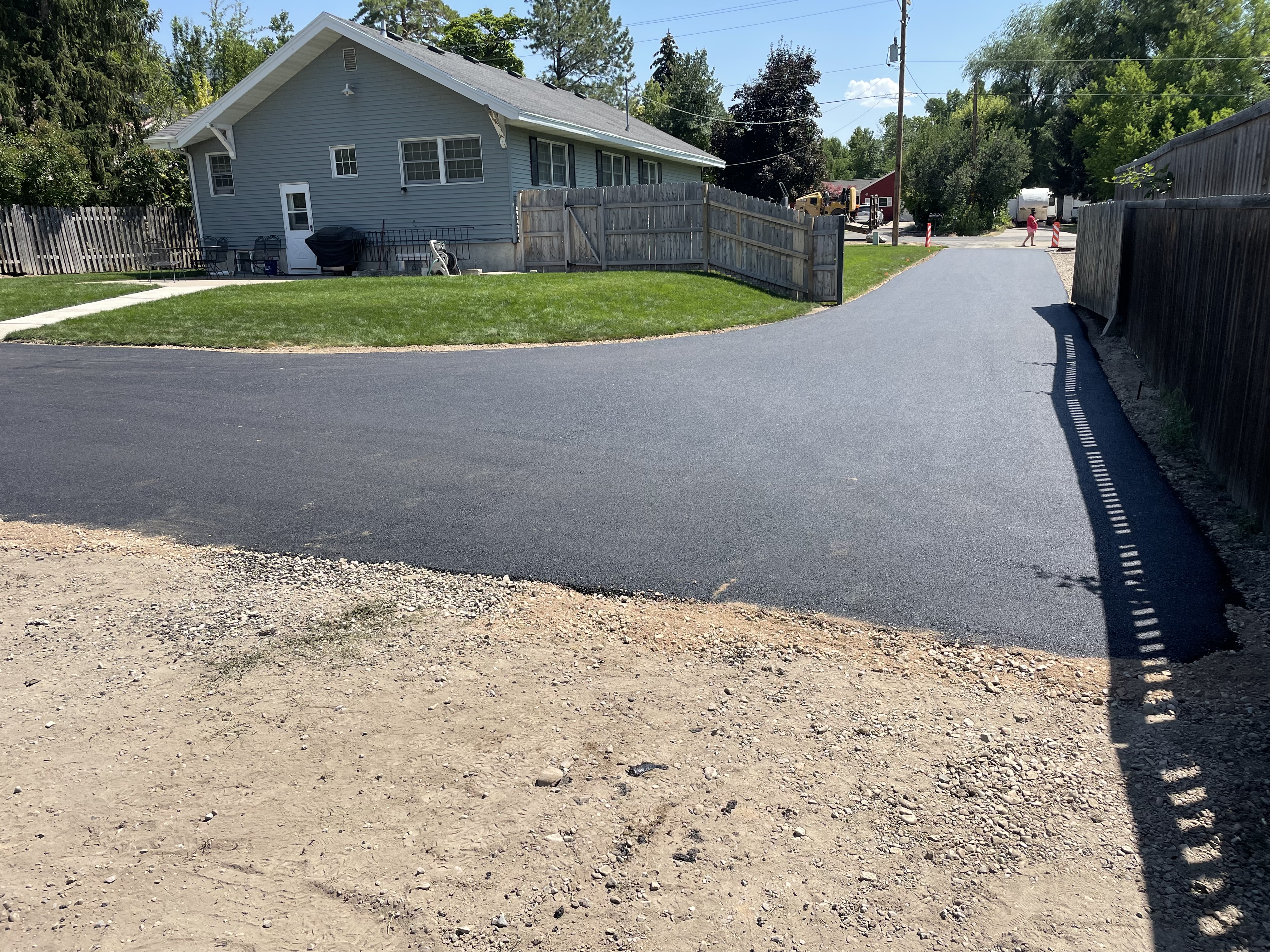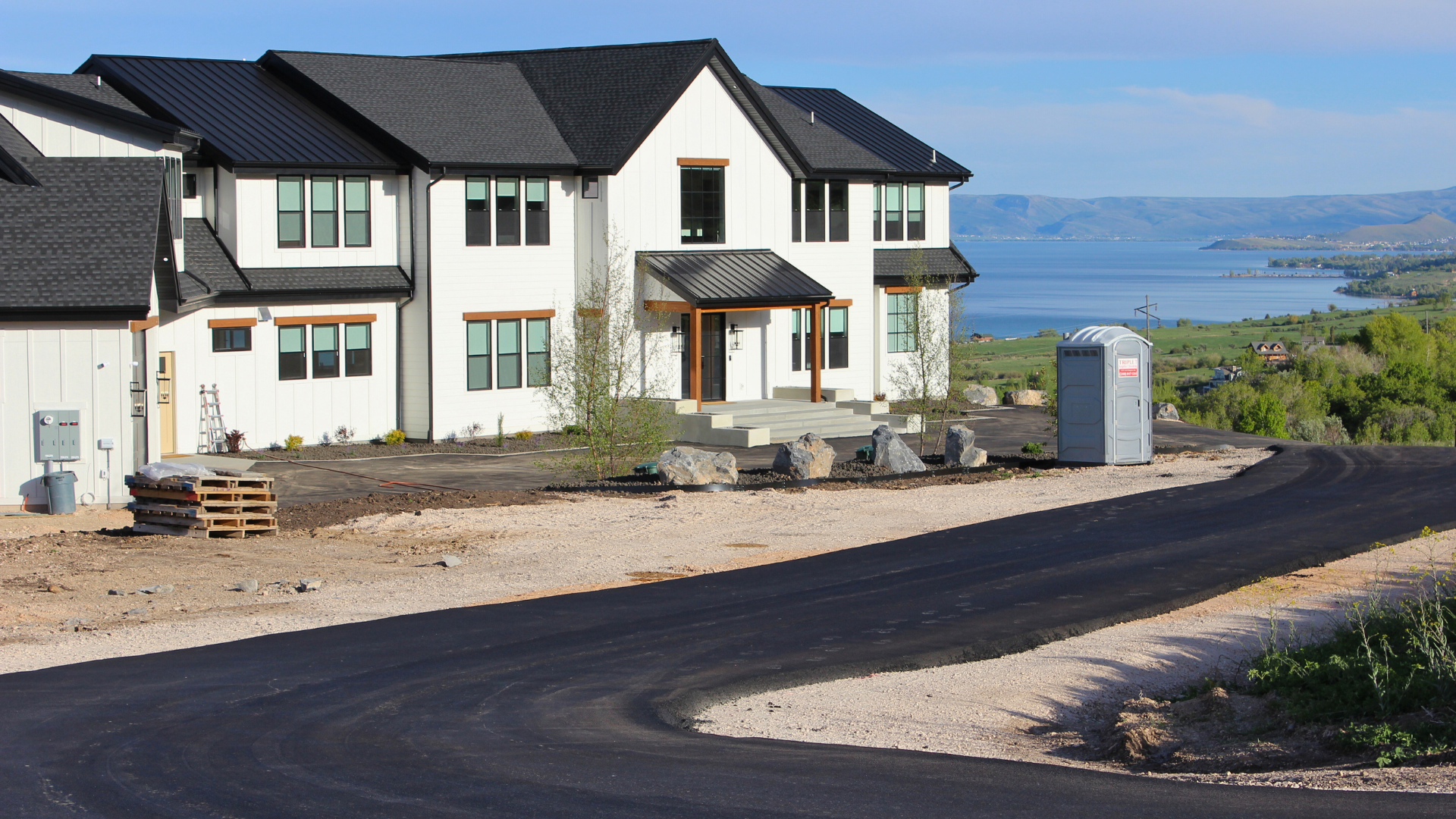
Long approach, steep grade, and a hard deadline before the first hard freeze. Here's how our Logan crew pulled off a 1,200-foot residential driveway install in three days — and what made the difference between this going smoothly and it turning into a four-week ordeal.
The job at a glance
- Location: Rural property outside Logan, UT
- Driveway length: ~1,200 feet from county road to home
- Width: 12 feet (with two 16-foot passing pull-outs)
- Total surface: ~16,000 sq ft including pull-outs and turnaround
- Grade: Up to 9% in the steepest section
- Timeline: 3 days on site, scheduled 11 days from quote signing
- Deadline: Finished before first hard freeze (mid-October)
The starting point
The homeowners had bought a property with what they described as "a driveway, technically." It was a gravel two-track running 1,200 feet up to the house, with washouts at every culvert and standing water in three low spots. They wanted asphalt before winter, knew the calendar was tight, and had been quoted two-month timelines by two other crews.
What made this job tricky:
- The grade. 9% is on the upper edge of where asphalt wants to behave on a hot install day. Steeper than that and we'd be talking concrete or a different surface mix.
- The length. 1,200 feet is a lot of base prep — and it has to be uniform end-to-end, or you get differential settlement.
- The drainage. The existing two-track had no drainage plan. Water ran where it wanted, including across the driveway in two spots.
- The deadline. Mid-October in Cache Valley is borderline. A hard freeze before our final compaction would have undone the work.
What we did differently
Step 1: Walk it before we quoted it
Long driveways look easy on a satellite photo. They aren't. We walked the entire 1,200 feet with the homeowners, flagged every low spot, every culvert crossing, and every existing utility marker. The quote we gave them was 12% higher than the lowest of their other two — but it included drainage work that those quotes had skipped entirely.
We told them straight: "If we just lay asphalt over what's here, you'll have a pothole in every low spot by next April. We can do it cheap or we can do it once." They went with once.
Step 2: Pre-stage materials
For a job this size, materials logistics drive the schedule. We pre-staged the road base aggregate the week before. That meant when the crew showed up Monday morning, they weren't waiting on dump trucks.
For the asphalt itself, we coordinated with the plant a week ahead. The plant held capacity for us on two consecutive mornings — so when we needed hot asphalt at 7:30 AM on Day 2 and Day 3, it was rolling out of the gate the moment we called.
Step 3: Drainage first, asphalt last
Day 1 was almost entirely drainage and grading. We:
- Cleaned out and re-aligned two existing culverts
- Added a new culvert at one drainage crossing that didn't have one
- Cut a roadside swale to direct surface water off the driveway, not across it
- Crowned the entire 1,200-foot path so water sheds to the sides rather than down the centerline
- Compacted the base in 6-inch lifts to ensure uniform support
This is the part nobody photographs. It's also the part that determines whether the driveway lasts 10 years or 25.
Step 4: Two-lift install for the steep section
On the 9% grade section, we ran a two-lift install: a binder course first, then a surface course on top. This is normally how we do commercial work, not residential — but the slope warranted it. The thicker total section (5 inches compacted vs. our usual 3) gives the asphalt the structural strength to resist creep on the hot days, and the two-lift method makes each individual lift easier to compact properly on the grade.
Step 5: Compact while we still had heat
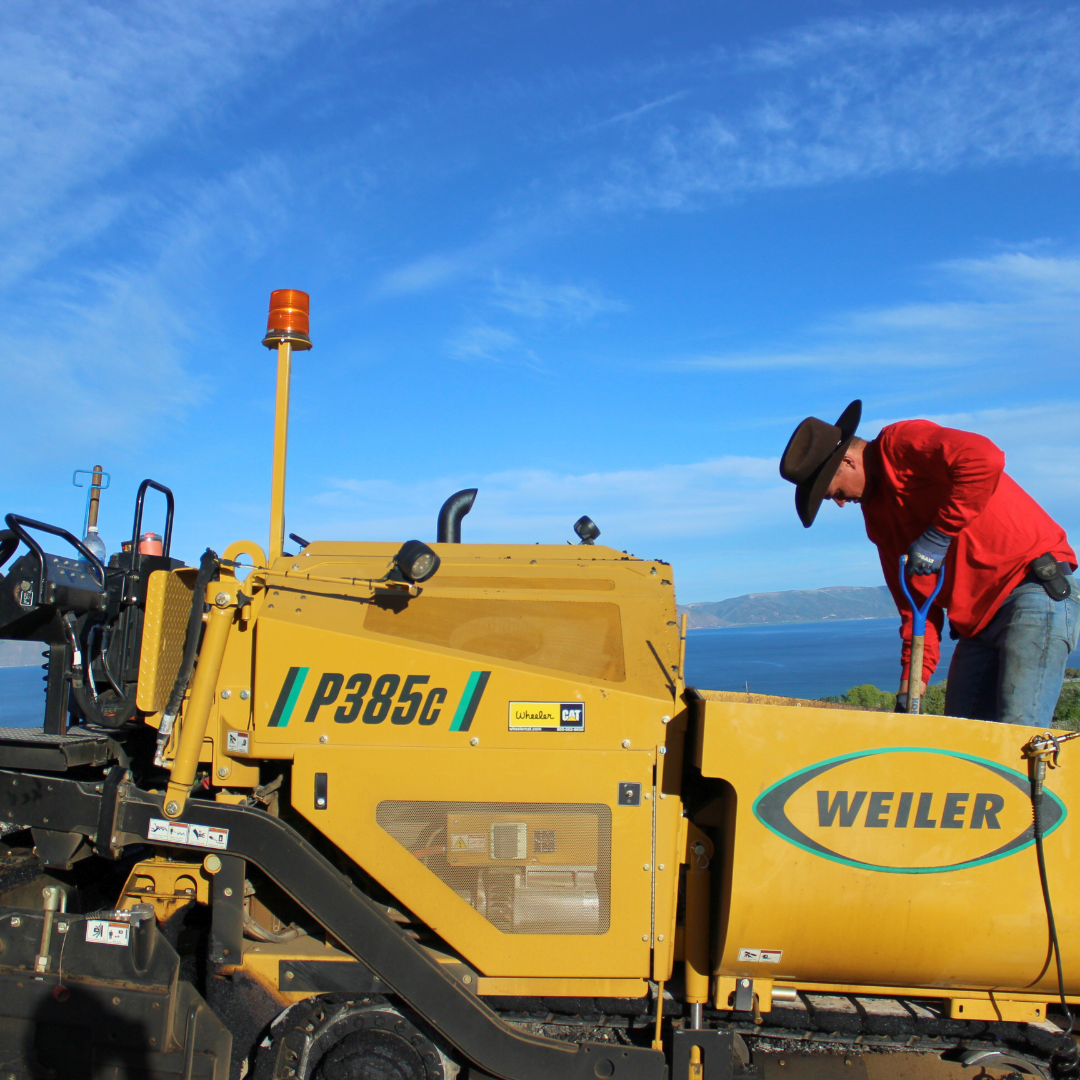
Day 3 was install day. We started at 7:30 AM with hot asphalt rolling out of the plant. The crew worked from the bottom up, so the cooled lower section was already loadable for the trucks bringing up new material. We finished compaction by 4:30 PM — well before the temperature dropped at sundown.
That timing matters. Asphalt has to be compacted while it's hot. On a long driveway, the trick is to coordinate paver speed, truck delivery, and roller cycles so each section gets fully compacted before it cools below working temp.
How it turned out
The homeowners drove on their new driveway on Saturday — three days after we started Wednesday. The first hard freeze hit Cache Valley nine days later. We made it with margin.
We came back the following spring (May) for a walk-through. No settlement at any of the drainage crossings. No cracking anywhere. The steep section that we'd been most worried about looked exactly the same as the rest of the driveway. They'll be ready for their first sealcoat the following summer.
What homeowners should take from this
A few things worth knowing if you're looking at a long or sloped driveway:
- Drainage is half the job. If you get quotes that are dramatically different, ask each contractor what drainage work they've included. That's usually where the gap is.
- Pre-staging matters. A crew that shows up with no materials ready is going to drag out a 3-day job into a 7-day job. Ask how they plan to handle materials.
- Late-season jobs need a real schedule. If you're trying to get paved in October in northern Utah, the contractor should be telling you the weather buffer, not just the start date.
- The cheapest quote on a long driveway is almost always the worst deal. The extra cost on a proper job is usually base prep — invisible work that determines longevity.
Got a long or tricky driveway?
If you have a project that other crews have called difficult — long approach, steep grade, drainage issues — we like those jobs. Get us out for a walk-through and we'll tell you straight what it'll take.
Or call us at (435) 310-4694.
Related reading:
Need help with your asphalt project?
Free estimate, written quote, no pressure. We'll be out within 48 hours.